Services & Capabilities
From model to installed steel
Two disciplines under one roof: an engineering office that proves the design, and a workshop equipped to build, machine and protect it.
Group 01
Design & Engineering
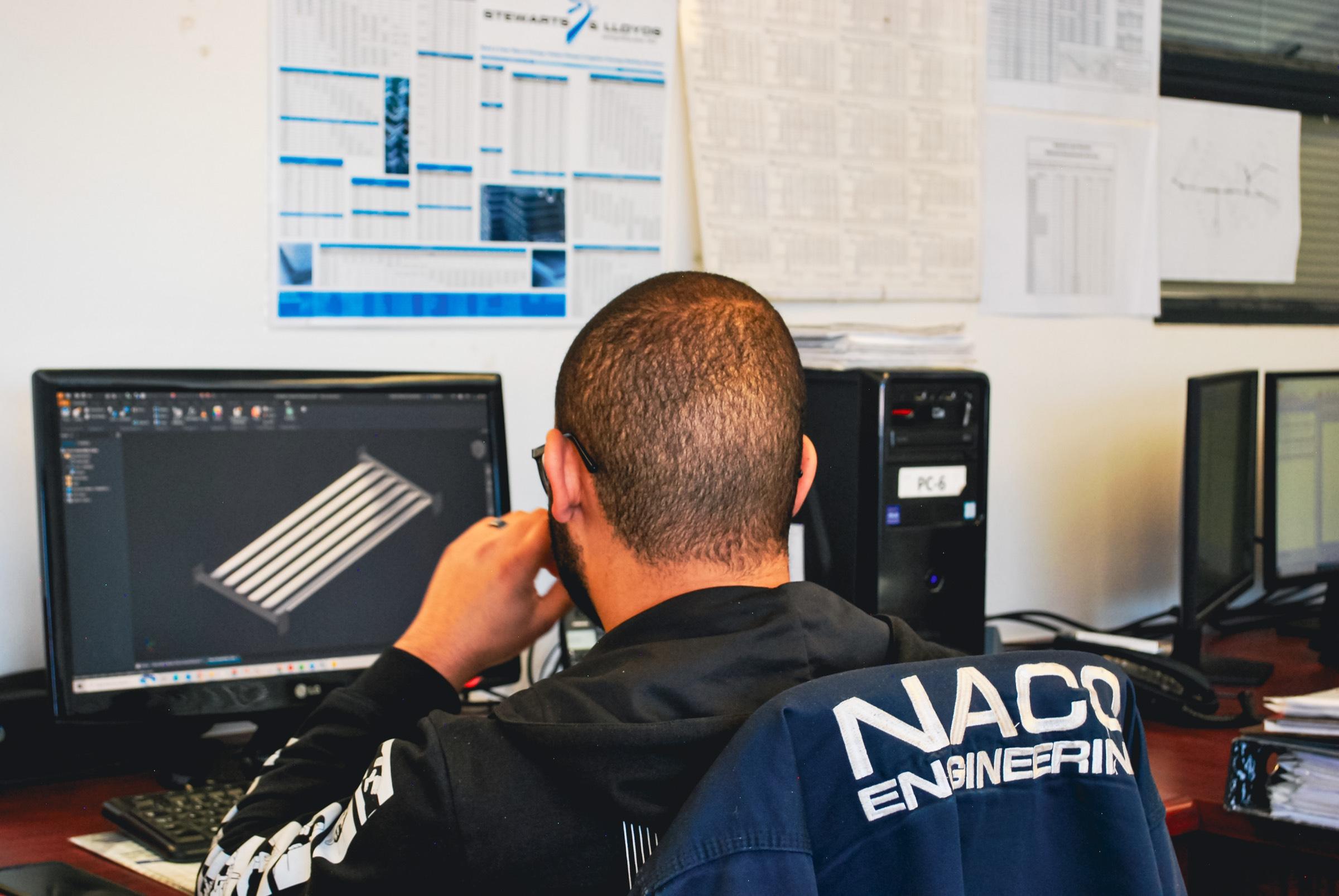
- Full mechanical detailing and fabrication drawings prepared for the shop floor.
- Three-dimensional models to resolve fit, clash and assembly before manufacture.
- Computational fluid dynamics for flow-critical vessels, ducting and handling equipment.
- Finite element analysis to verify structural strength, stiffness and fatigue life.
Group 02
Manufacturing
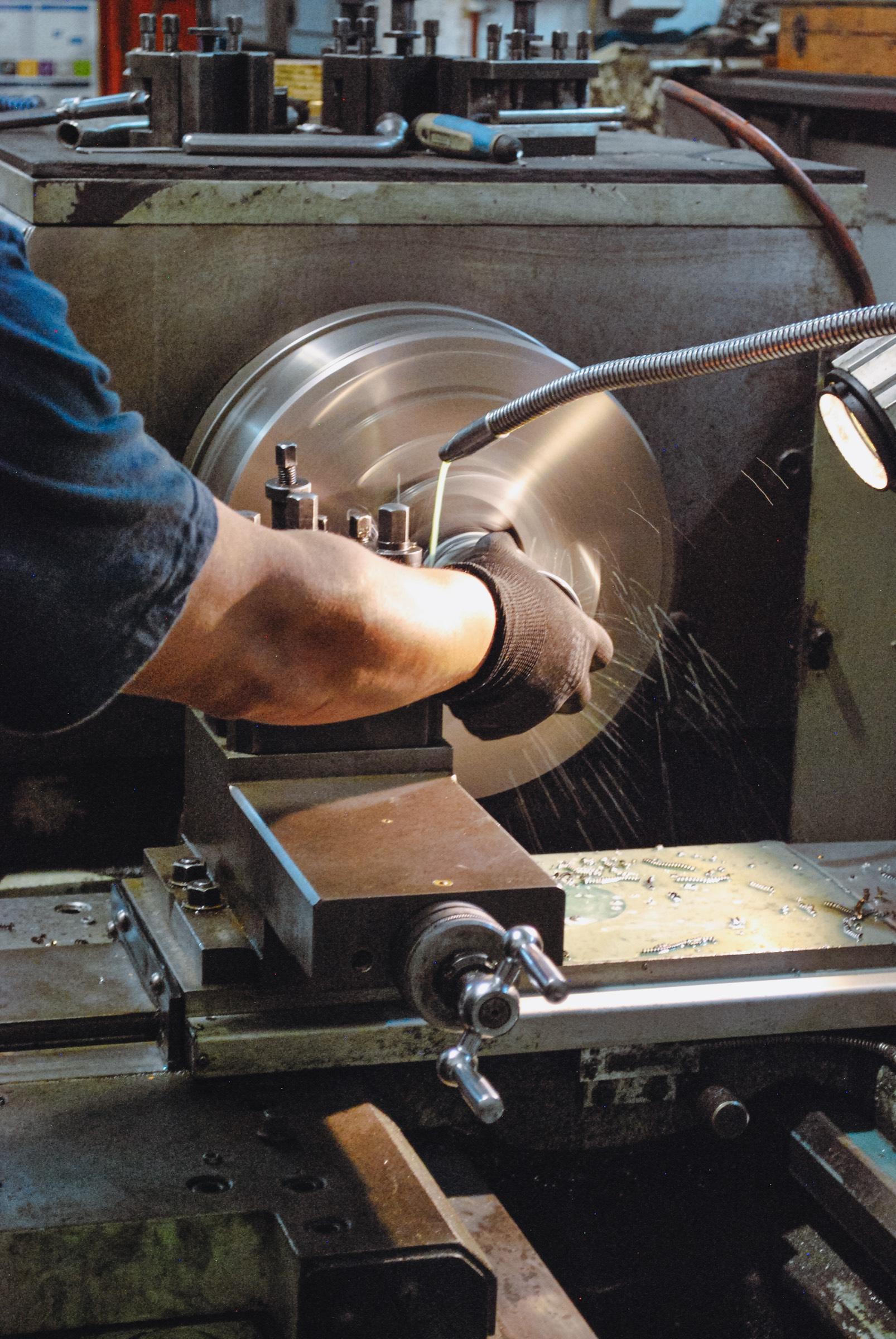
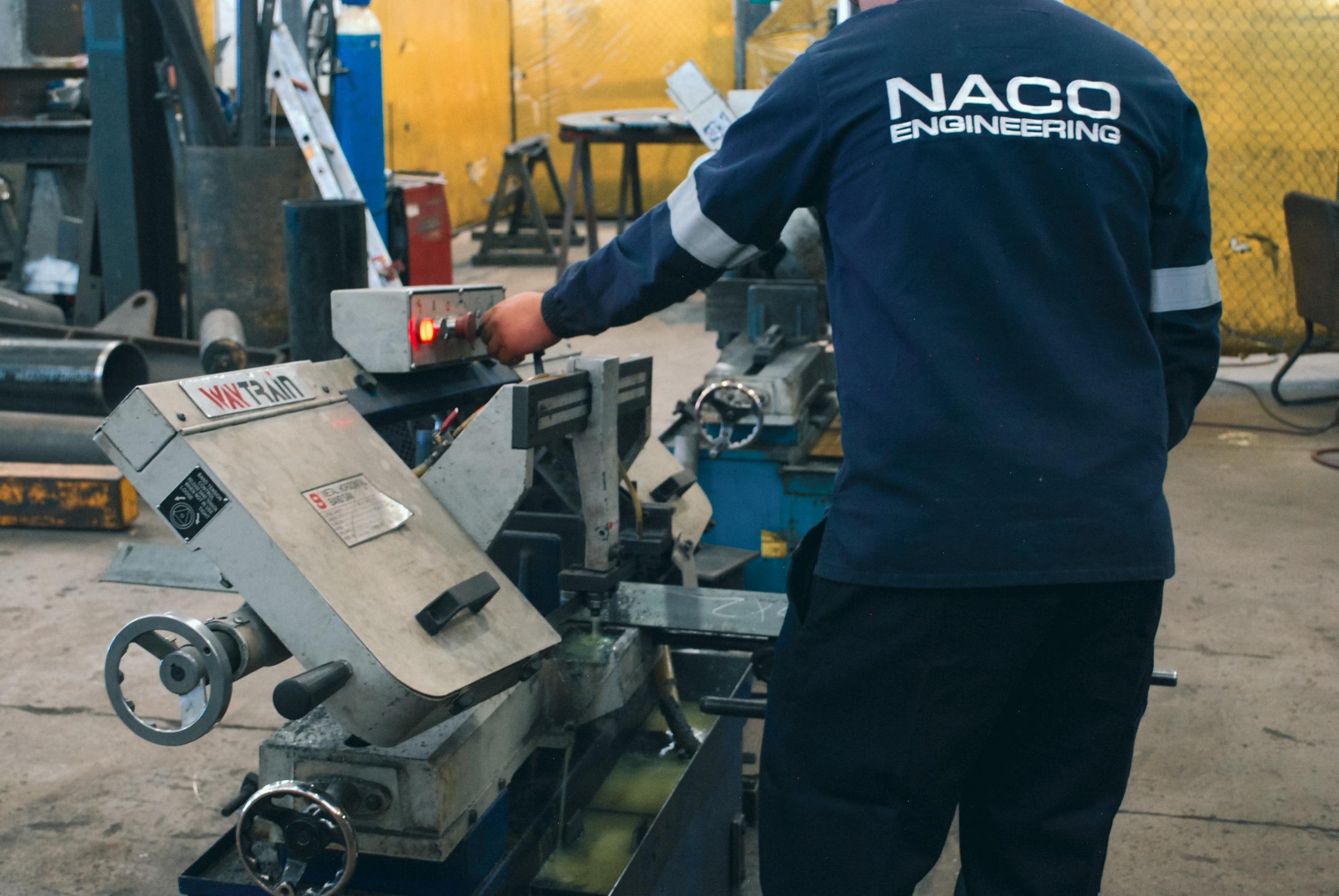
- Machined components and shafts finished to drawing tolerance in-house.
- Surface preparation and protective coating through our own division.
- Plate rolled to radius up to 3 m x 10 mm, or 0.5 m x 30 mm, in mild and stainless steel.
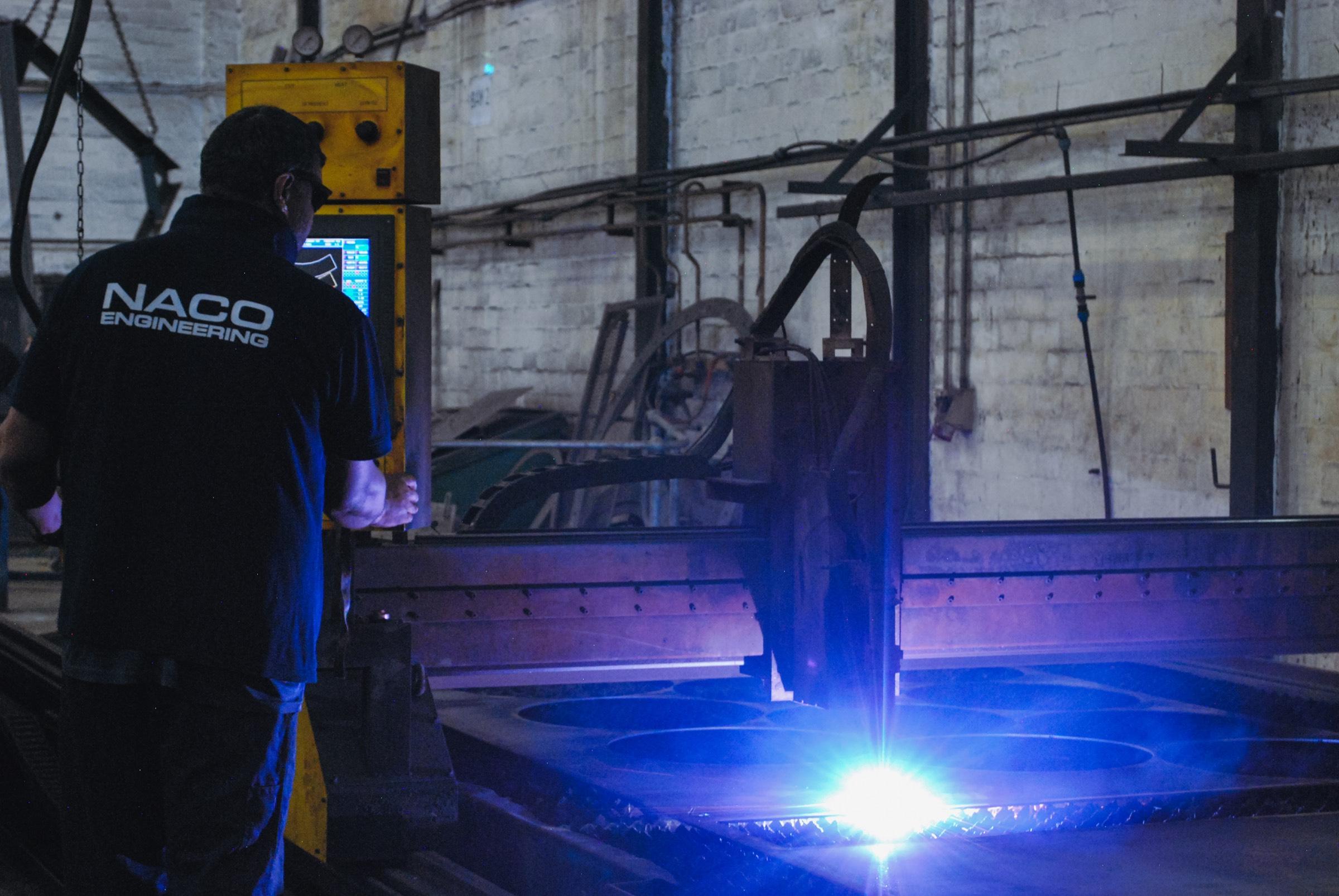
- One of the largest plasma beds in the country, profiling plate up to 12 m x 2.5 m straight from nested drawings.
- Arc, MIG, TIG and pulse-on-pulse MIG, plus a 3 kW laser welder, across mild steel and stainless.
- Repeatable holes for connections, brackets and cladding rails.
- Rigging, erection and mechanical installation teams working on client sites.
- Planned and breakdown maintenance to keep plant running.
- Our own truck-mounted cranes for lifting and placing on client sites.
Plant & equipment
Overhead cranes
Four 10 ton and two 5 ton overhead cranes serving the fabrication bays.
CNC plasma cutting
One of the largest beds in the country, taking plate up to 12 m x 2.5 m.
Brake press
3 m x 6 mm bending capacity in mild and stainless steel.
Guillotine
3 m x 6 mm shearing capacity in mild and stainless steel.
Plate rolling
Up to 3 m x 10 mm, or 0.5 m x 30 mm, in mild and stainless steel.
Truck-mounted cranes
Our own truck-mounted cranes for lifting and placing steel on client sites.
In-house division
Corrosion Protection Division
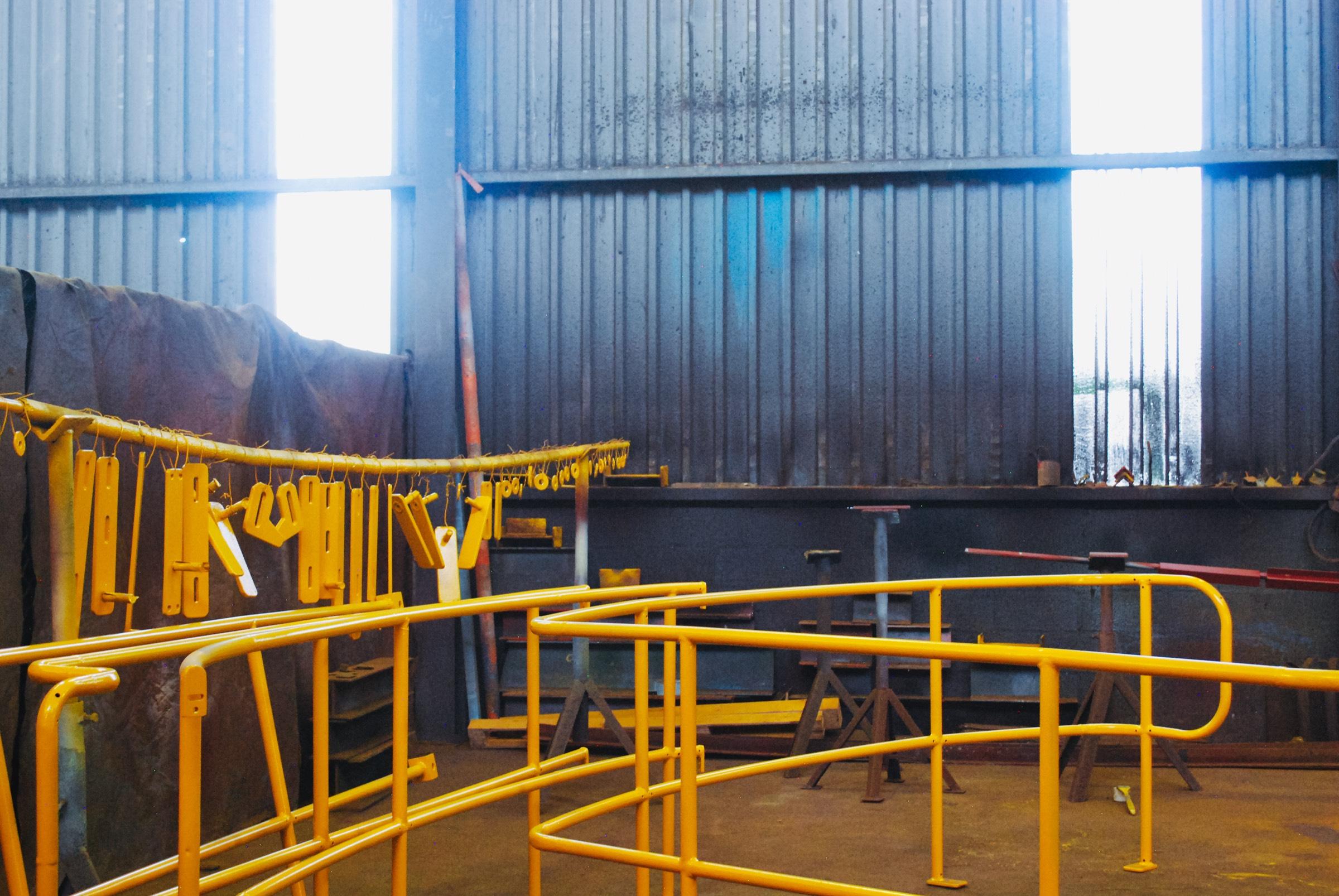
Previously outsourced, corrosion protection now runs in-house: abrasive blasting, primers and finish coating systems applied to our own fabrication and to client steel. Keeping it under our own roof shortens lead times and puts coating quality under the same inspection as the fabrication that precedes it.
Capability FAQ
What the processes actually mean
Plain answers on the processes behind the capability list above.
How big a plate can you CNC plasma cut?
Up to 12 m by 2.5 m, on one of the largest plasma beds in the country. CNC plasma profiles shapes out of plate under computer control, which keeps repeat parts identical and edges consistent, and the bed size means long members and large plates do not have to be cut down and joined first.
What does plate rolling mean, and when do I need it?
Plate rolling curves steel plate to a specified radius rather than bending it at a point. We roll up to 3 m x 10 mm, or 0.5 m x 30 mm for heavier work, in mild and stainless steel. You need it wherever a structure calls for a genuine curve, such as tanks, hoppers, chutes and ducting, instead of a series of straight segments. Note we roll plate only, not flat bar, angle or tube.
Why does steel need abrasive blasting before painting?
Paint bonds to the surface profile underneath it, not to mill scale or rust. Abrasive blasting strips the surface back and gives the primer a key to grip, which is the single biggest factor in how long a coating system lasts. Coating unprepared steel is the most common reason a paint system fails early.
Do you do on-site installation and maintenance?
Yes. Some work cannot come to the workshop: plant that is installed, structures that are already in service, or breakdowns that have to be dealt with where they are. Our teams do site work and on-site mechanical maintenance across the Western Cape.
What are FEM and CFD analysis, and do I need them?
FEM (finite element method) analysis predicts how a structure behaves under load; CFD (computational fluid dynamics) predicts how air, water or product moves through it. They are worth doing when failure would be expensive or dangerous, or when you are designing something new rather than repeating a proven design, because it is far cheaper to find a problem in the model than in fabricated steel.
Can you machine components as well as fabricate them?
Yes. Milling and turning run alongside the fabrication shop, so assemblies that need machined faces, bores or shafts can be completed in one place rather than being sent out part-finished.
Drawings ready? So are we.
Send us your scope and we will come back with a costed, schedulable quotation.